


news
A split second can make all the difference on the roads: most Hungarians do not know what constitutes a safe distance
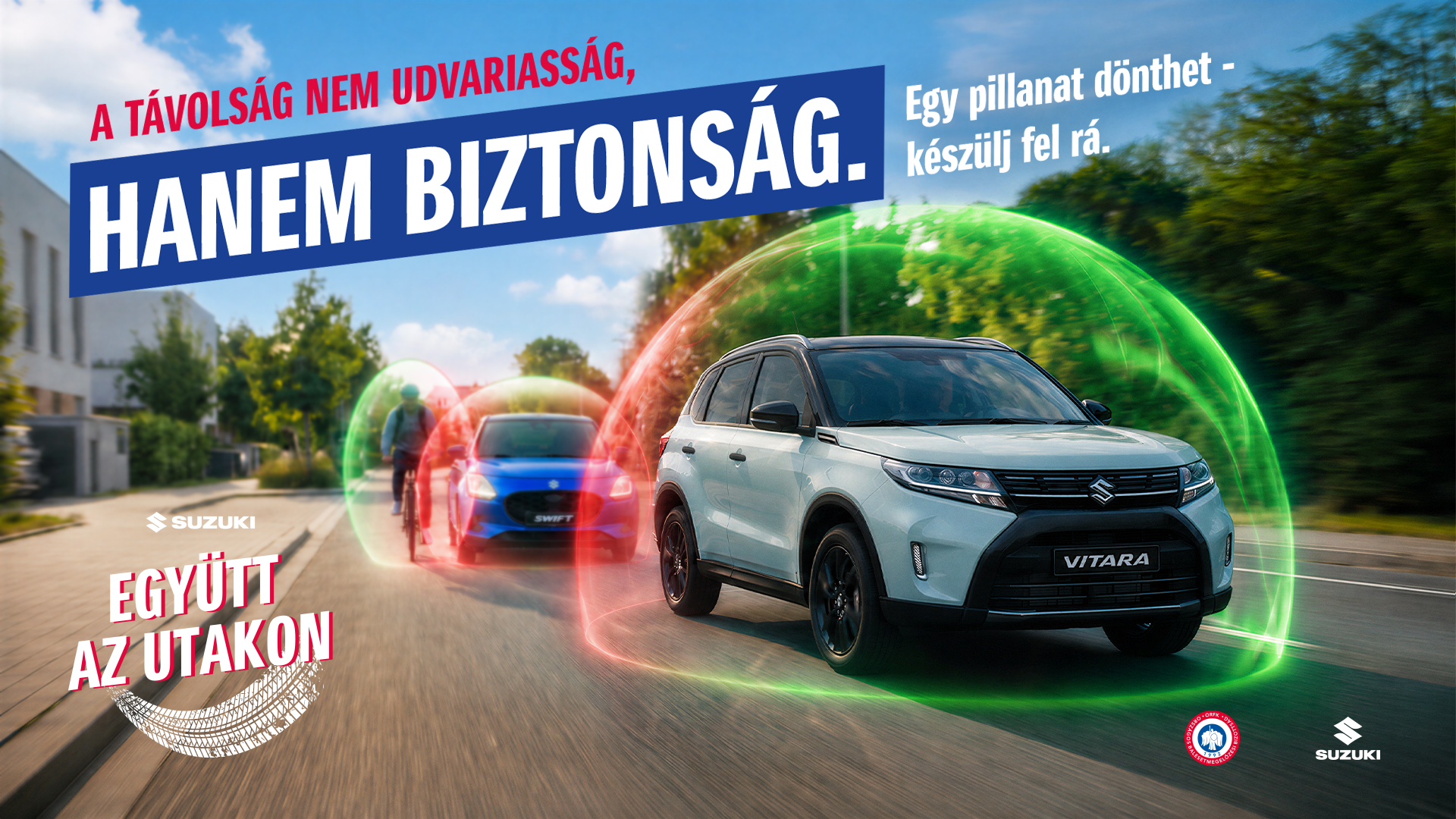
Do we leave enough following distance? Do we know how much lateral clearance is required when overtaking a cyclist, or how long it takes a vehicle to come to a stop at motorway speeds? According to a nationally representative survey commissioned by Magyar Suzuki and conducted by Ipsos, while most Hungarian road users consider safe distancing important, many are unaware of the distance required to create the safety margin needed to avoid dangerous situations. Building on the findings of the research, Magyar Suzuki is launching its “Together on the Roads” road-safety campaign for the fifth consecutive year. This year’s central message is: “Keeping your distance is not a courtesy – it’s all about safety. A split second can make all the difference. Be prepared.”
Magyar Suzuki launched its Together on the Roads corporate social responsibility programme in 2022 to raise awareness of the importance of safe and mutually respectful road use. This year’s initiative marks the fifth edition of the campaign, encouraging all road users – motorists, motorcyclists, cyclists, e-scooter riders and pedestrians – to share the responsibility for safer roads. The 2026 campaign aims to highlight that maintaining a safe distance is not merely a rule to follow, but one of the simplest and most effective ways of ensuring that everyone gets home safely. This year’s campaign launches at the same time as Safety Week, a programme series organised by ORFK-OBB, allowing the two initiatives to reinforce each other in raising awareness about the importance of road safety and using the roads responsibly.
Distance gives you time to react
One of the survey’s key findings is that maintaining a safe distance matters not only in itself, but also because it provides time to respond to unexpected situations. In the event of sudden braking, an unexpected manoeuvre or even a momentary lapse in attention, those few extra metres can make the difference between a near miss and a collision.
Modern vehicles are equipped with increasingly advanced driver assistance systems, but even these cannot override the laws of physics or replace responsible decision-making. Maintaining appropriate following and lateral distances therefore remains one of the most important safety margins in every traffic situation.
“Technology provides valuable support while driving, but it cannot replace attentiveness, responsible decision-making or consideration for other road users. Through this year’s Together on the Roads campaign, we want to emphasise that maintaining appropriate following and lateral distances is not a matter of courtesy, but a fundamental requirement for safe road use. Those few extra metres we leave for one another may save lives when the unexpected happens," said Zsuzsanna Bonnár-Csonka, Head of Corporate Communication of Magyar Suzuki.
We see ourselves as more considerate than others
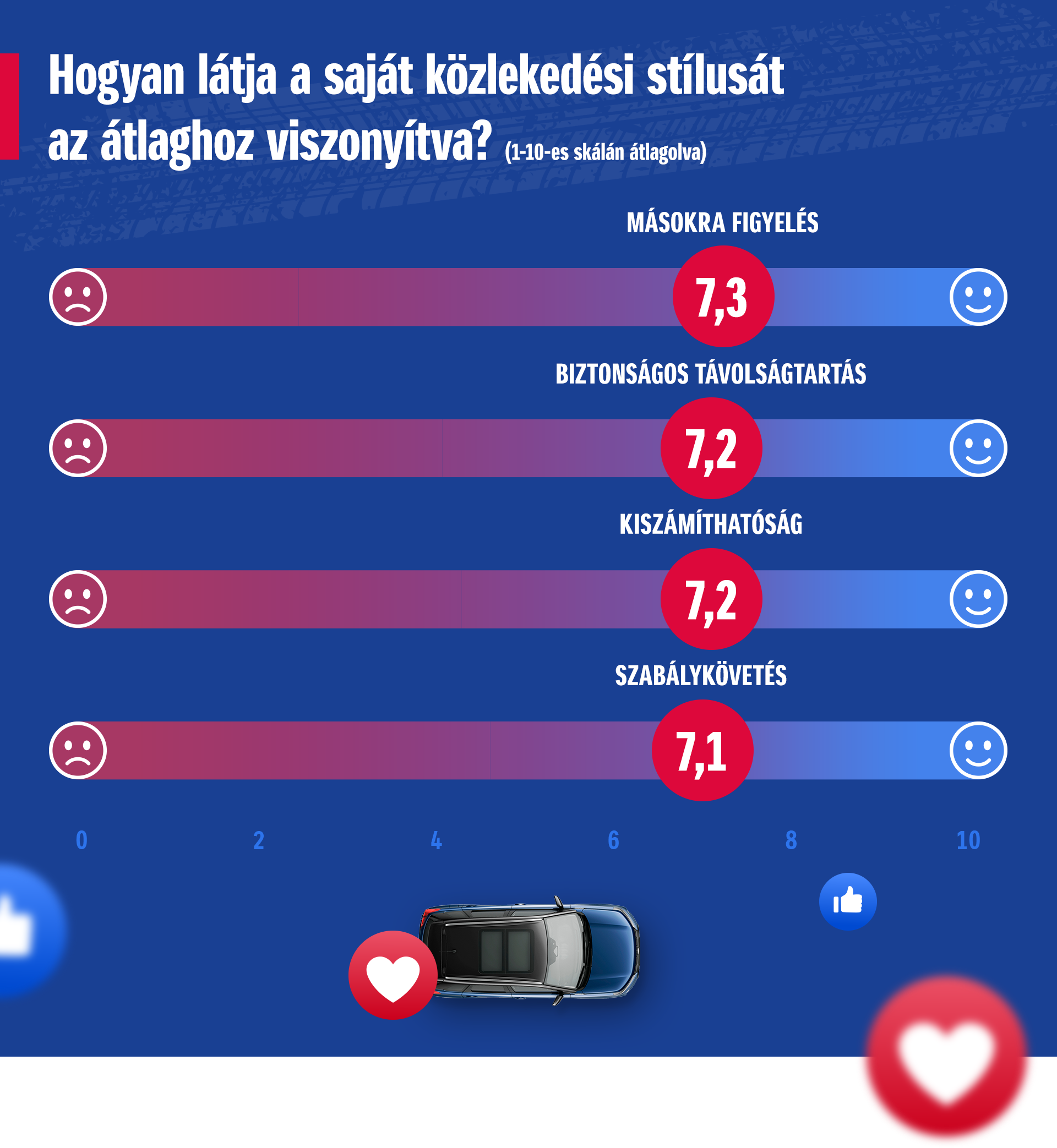
One of the key findings of the survey is that road users generally think of themselves more favourably than they perceive other road users. Respondents rated how attentive they are towards others at an average of 7.3 points, safe distancing and predictability at 7.2 points, and their own compliance with traffic rules at 7.1 points on a ten-point scale.
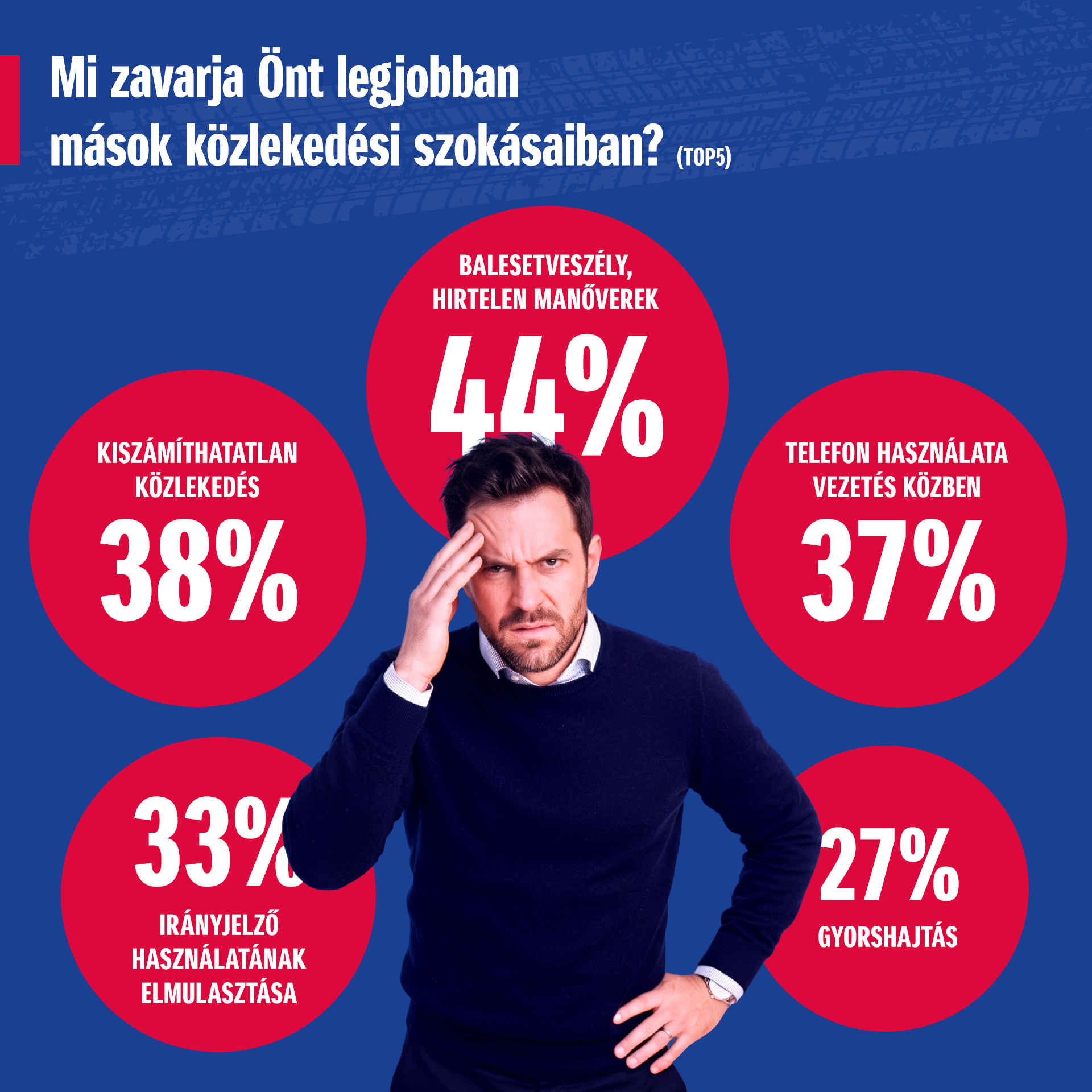
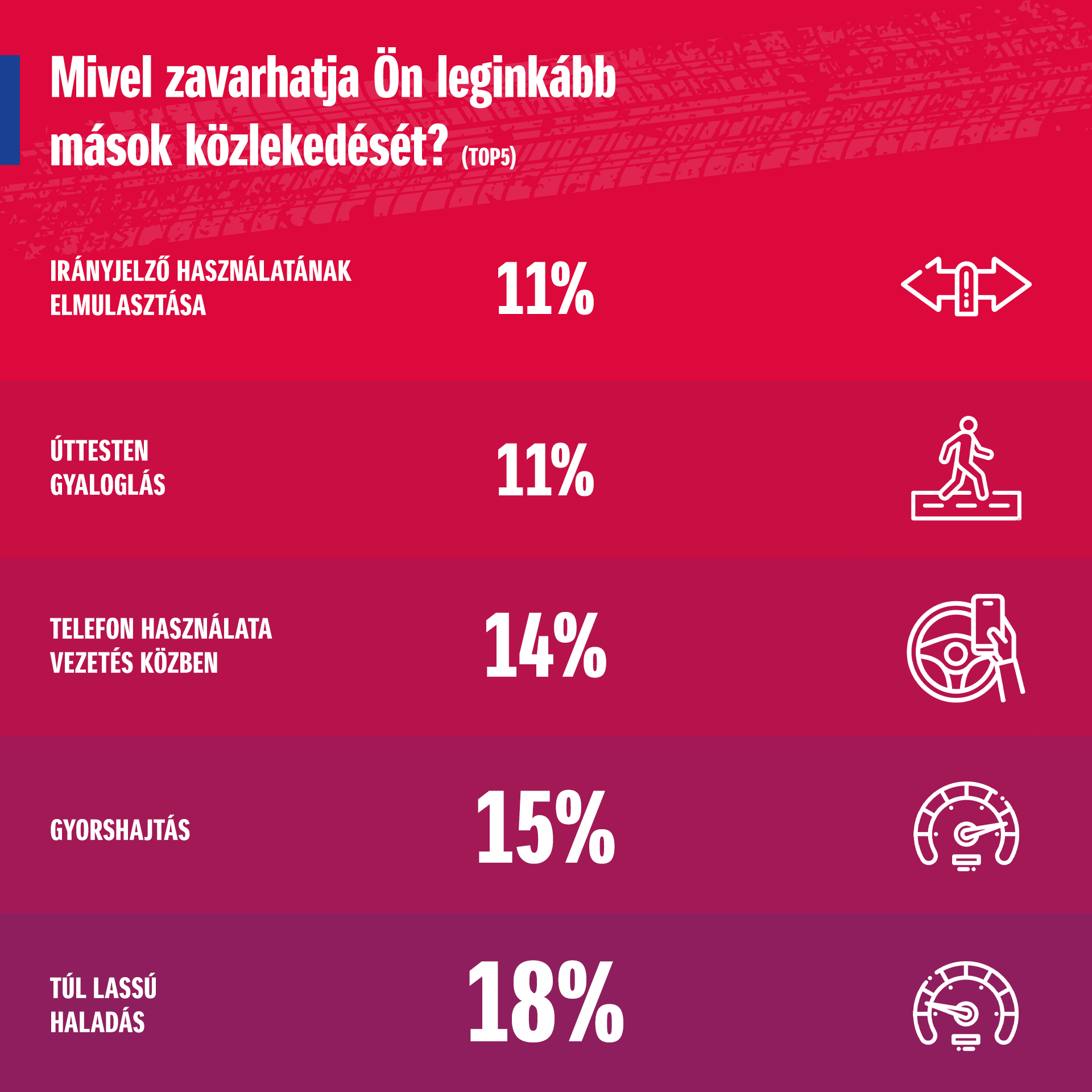
By contrast, perceptions of different road user groups were significantly more critical. Respondents considered e-scooter riders the least predictable group (2.6 points), and they also received the highest score in terms of perceived danger (6 points). Among the most disruptive road behaviours, respondents highlighted dangerous sudden manoeuvres, unpredictable driving, mobile phone use while driving, failing to indicate and speeding.
What these situations have in common is that they force other road users to react unexpectedly – and this is when those few extra metres become particularly important, providing valuable time to respond safely.
We know that distance matters, but we don’t know how much is enough
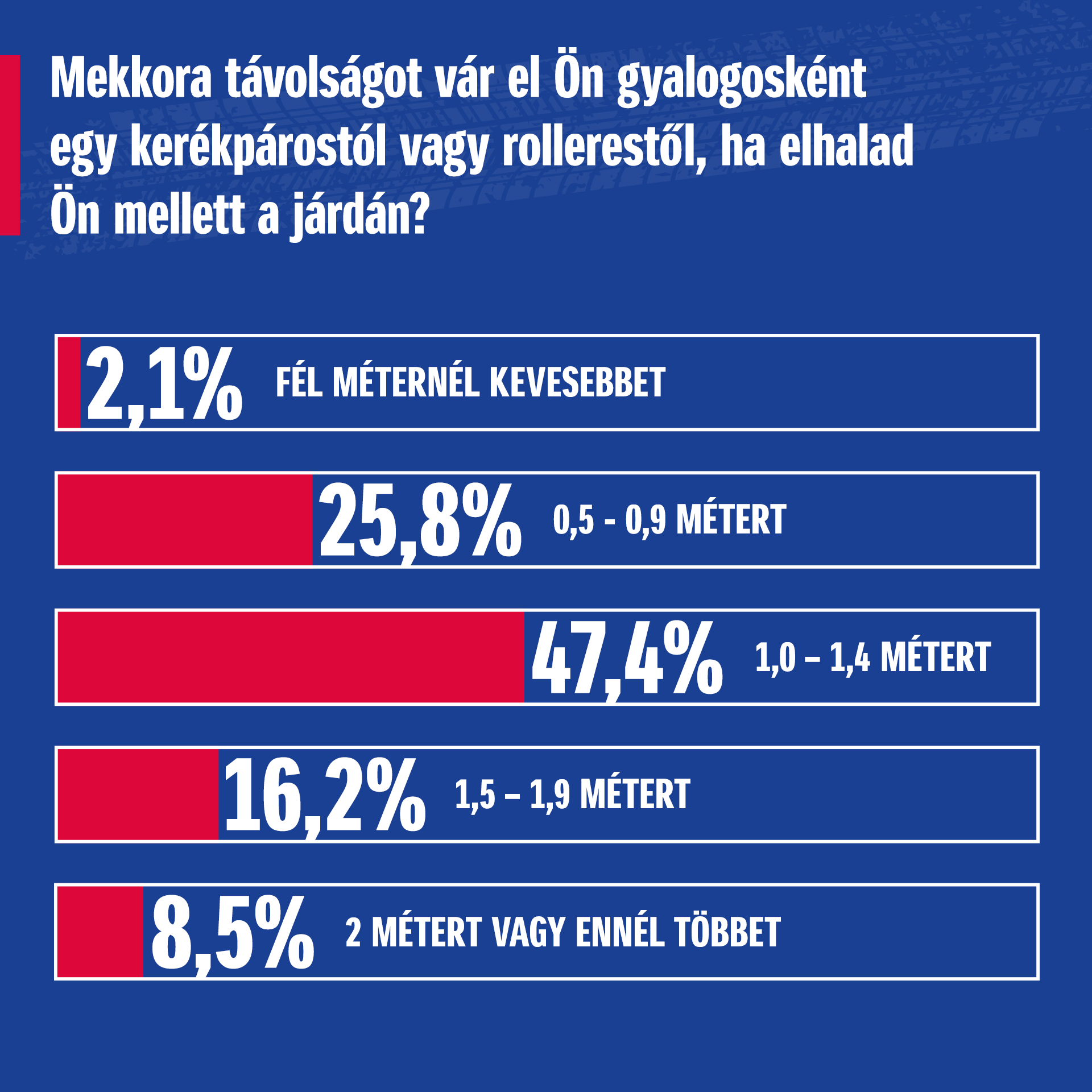
The survey shows that most road users would like to have more space around them. As pedestrians, 47% of respondents expect cyclists or e-scooter riders passing alongside them to maintain a distance of 1-1.4 metres, while a quarter of respondents consider an even greater distance appropriate. As motorists, nearly half of the respondents believe that keeping at least one metre of distance is ideal when a motorcyclist, cyclist or e-scooter rider stops alongside them at a red light. The findings also show that, as road users, we typically expect others to leave more space when we are walking or cycling than the distance we consider necessary as drivers when passing or interacting with more vulnerable road users.
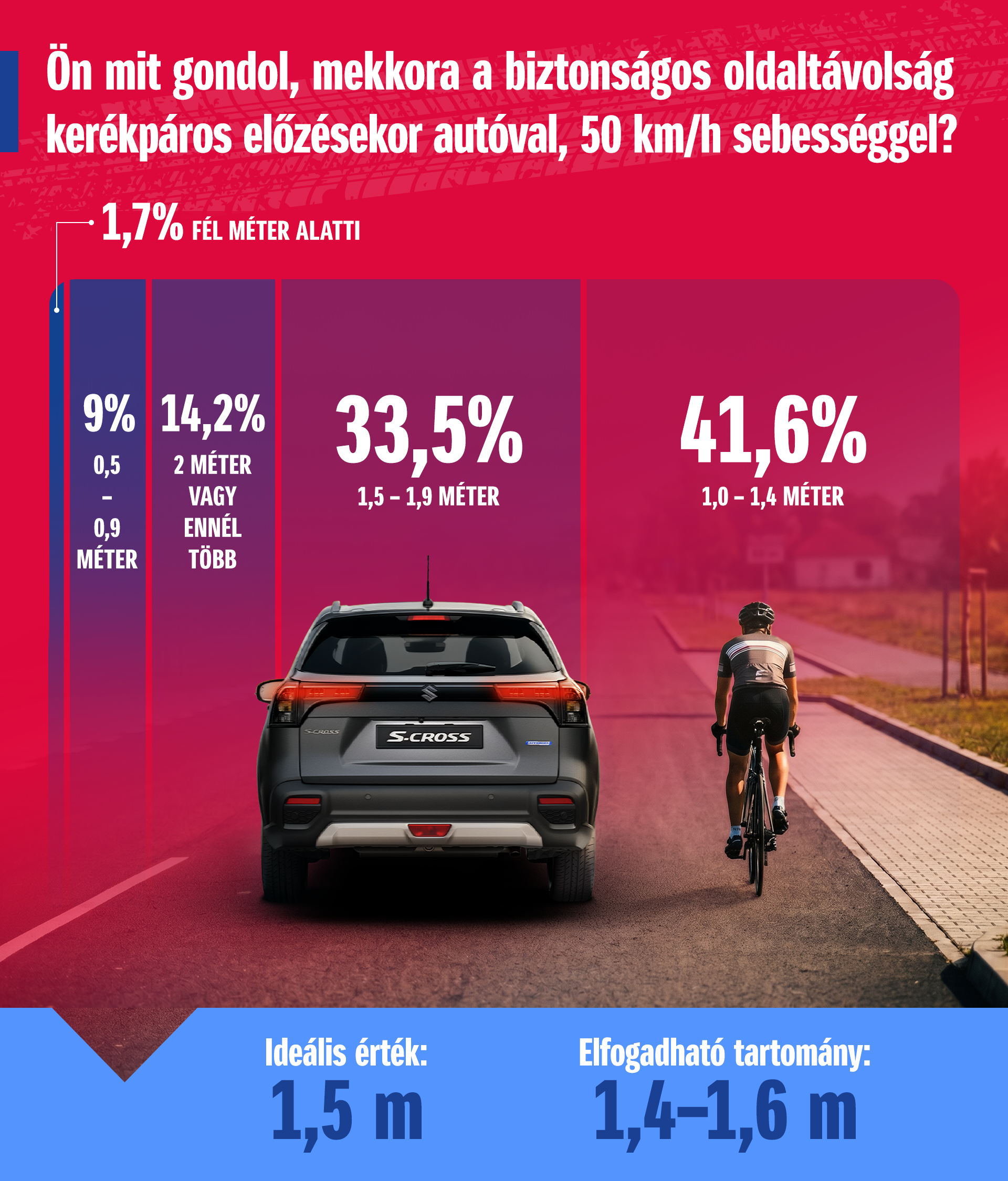
A similar pattern can be seen when overtaking cyclists: 41.6% of respondents consider a lateral distance of 1-1.4 metres safe, while one third believe 1.5-1.9 metres is appropriate. This shows that road users recognise the importance of greater distance, but there is no common understanding of what constitutes an adequate safety margin.
Overall, the findings indicate that people understand the importance of maintaining sufficient distance, but there is still a lack of shared knowledge about what distance provides genuine safety.
We know about following distance, but braking distance is less understood
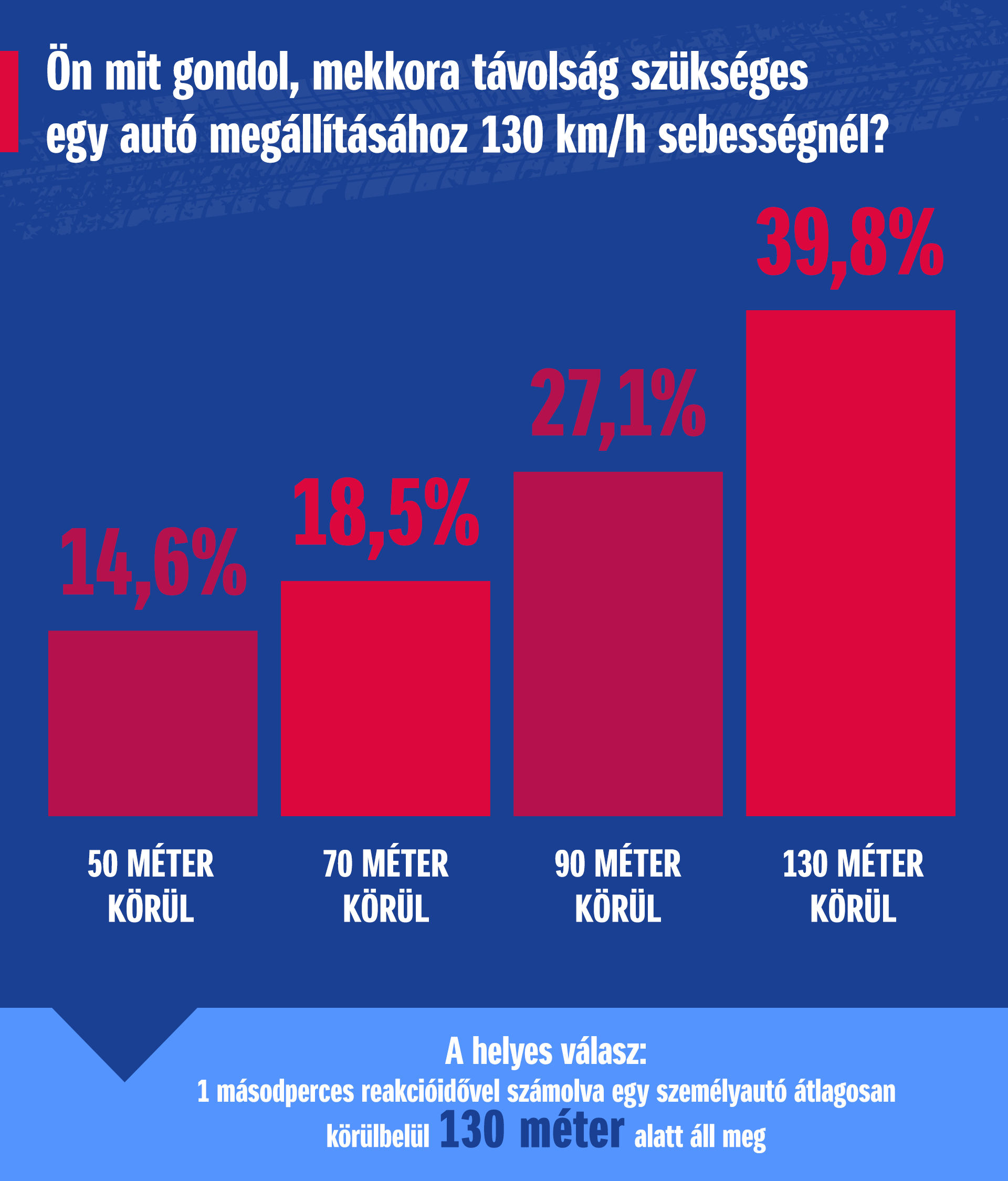
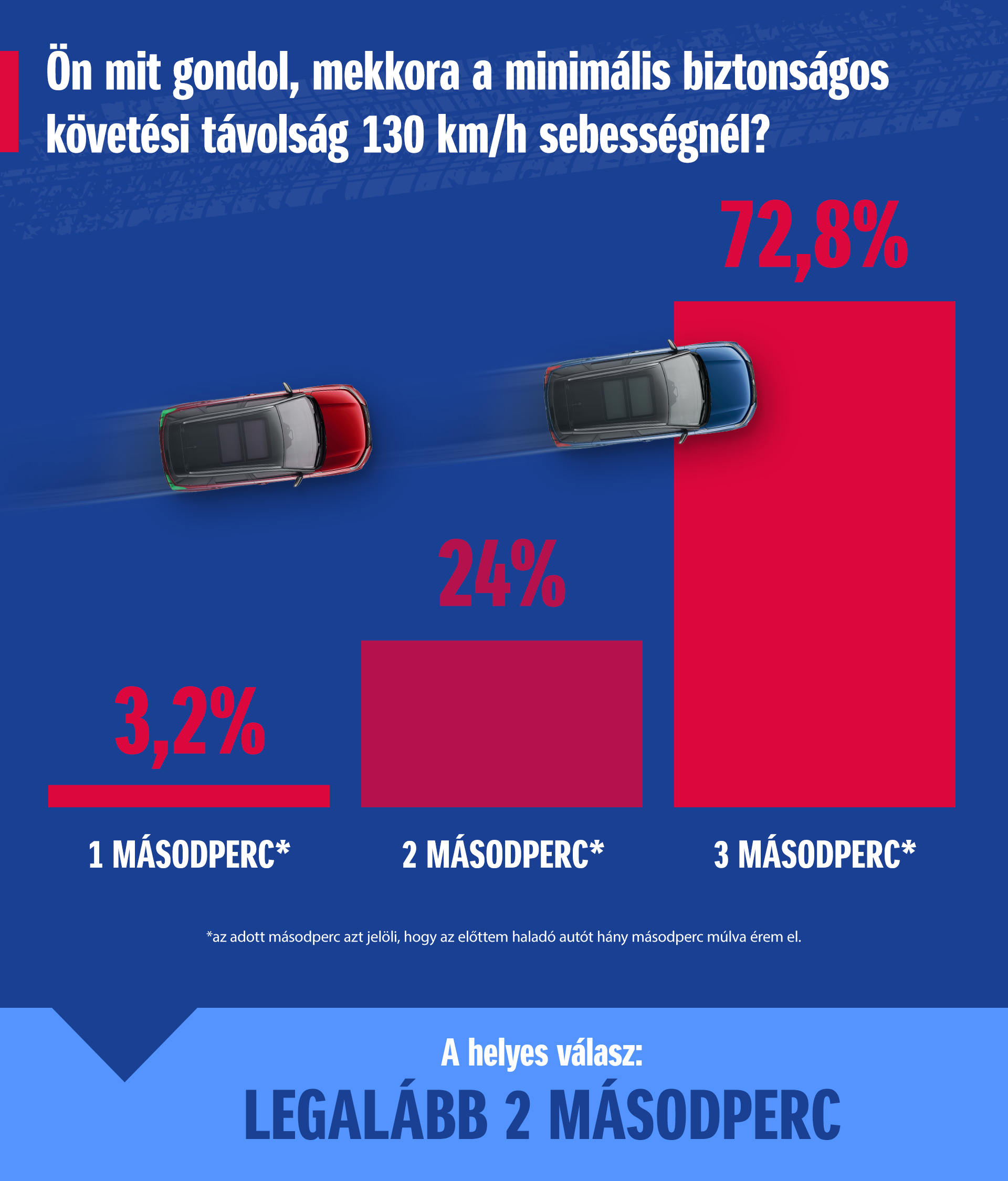
One positive finding is that nearly three quarters of respondents identified a following distance of at least three seconds as appropriate at a speed of 130 km/h. While professional guidance recommends a minimum safe following distance of two seconds, three seconds provides an even greater safety margin. However, braking distances are much less well understood: only 39.9% of respondents knew that a passenger car travelling at 130 km/h requires approximately 130 metres to come to a complete stop when assuming a one-second reaction time.
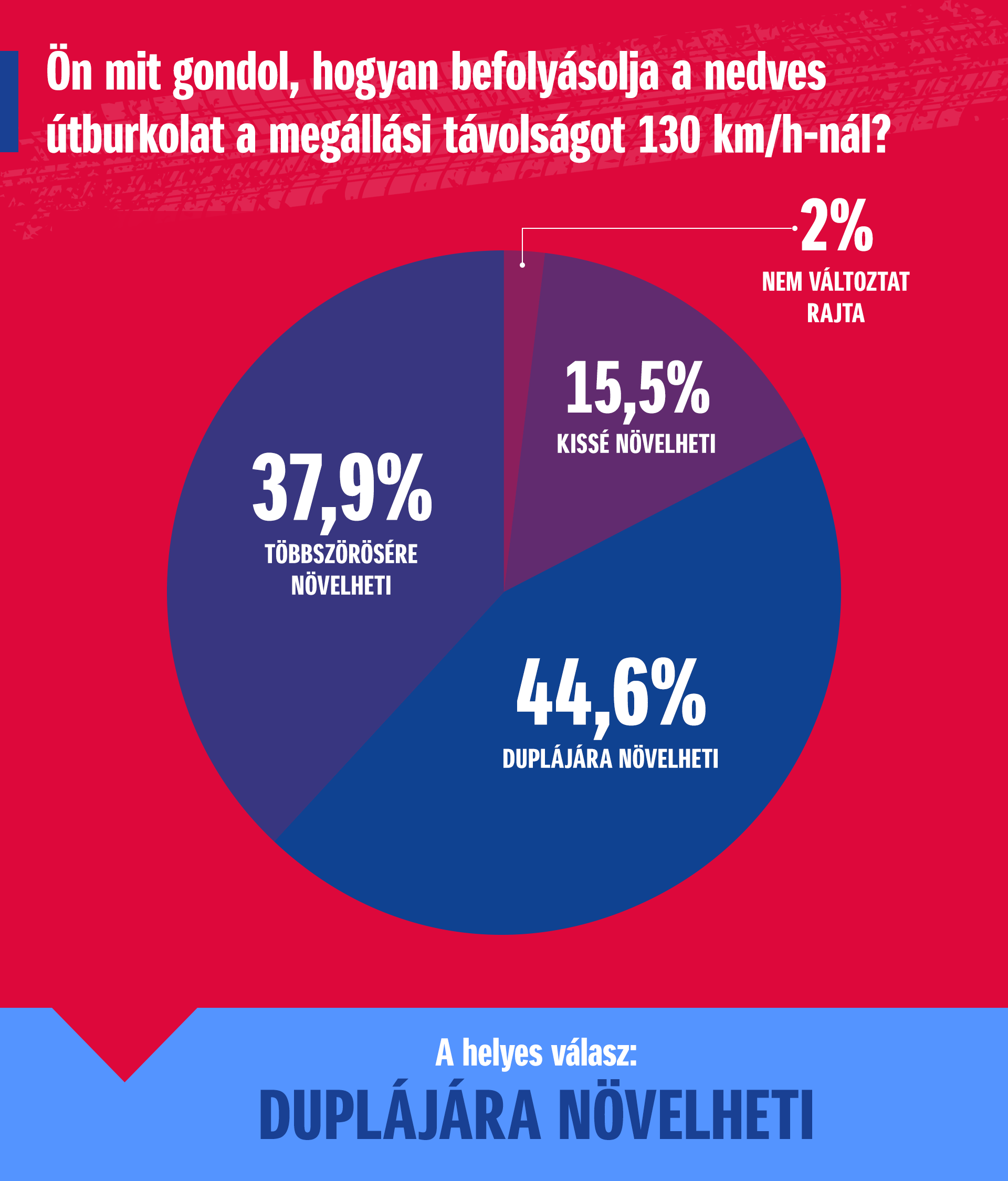
Most respondents correctly recognise the impact of wet road surfaces: almost half believe that stopping distance can even double, while 37.9% believe it can increase by an even greater amount in such conditions.
“One of the most important conclusions I draw from the survey is that road users recognise the importance of maintaining a safe distance, yet in many cases they are uncertain about what this means in practice. As police officers, we see every day that accidents are often caused not by speed alone, but by the lack of sufficient time to react. Safe following distance is not simply about metres; it is about those few seconds that allow drivers to recognise a hazard and respond safely. Therefore, the most important question is not whether we leave two or three seconds of distance, but whether we always maintain enough of a safety margin to handle unexpected situations. If we can strengthen this mindset among road users, we will already have taken an important step towards reducing the number of accidents on our roads," said Lieutenant Colonel Zsolt Berzai, Secretary-General of the National Accident Prevention Committee of the Hungarian National Police Headquarters (ORFK-OBB), commenting on the findings of the research.
What did the survey reveal? These were the correct answers
As part of the survey, road users were asked several practical questions related to maintaining safe distances. The results clearly show that knowledge is often incomplete, which is why one of the aims of the campaign is to provide road users with the necessary information.
The key facts are as follows:
• On motorways, at a speed of 130 km/h, the recommended following distance is at least two seconds.
• At 130 km/h, assuming a one-second reaction time, an average passenger car requires approximately 130 metres to come to a complete stop.
• At 30 km/h, assuming a one-second reaction time, an average passenger car requires approximately 15 metres to come to a complete stop.
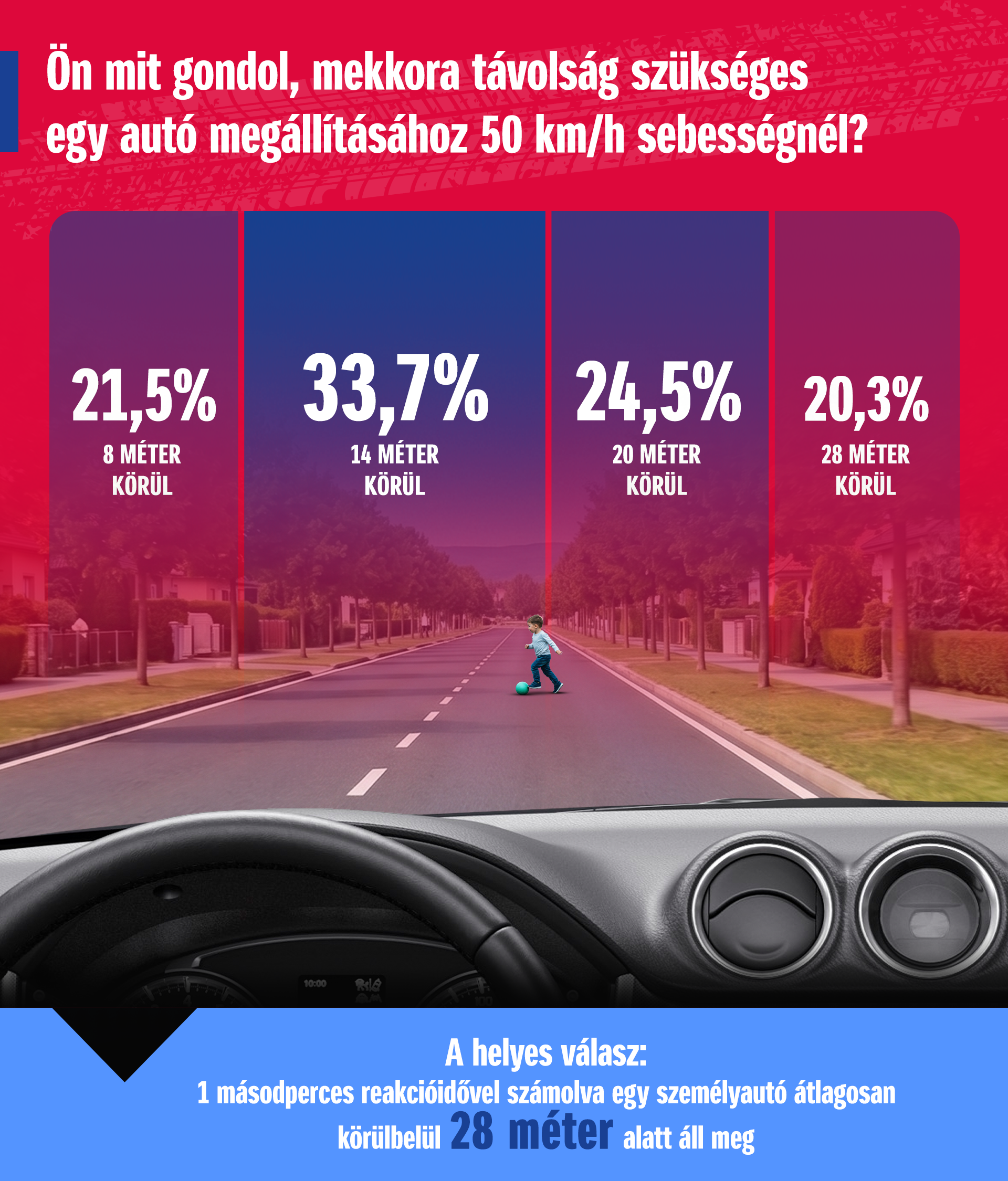
• At 50 km/h, assuming a one-second reaction time, an average passenger car requires approximately 28 metres to come to a complete stop.
• At 90 km/h, assuming a one-second reaction time, an average passenger car requires approximately 70 metres to come to a complete stop.
• On wet road surfaces, stopping distance can even double.
• When overtaking a cyclist, drivers must maintain a lateral distance of at least one metre up to 50 km/h, and at least 1.5 metres above 50 km/h.